
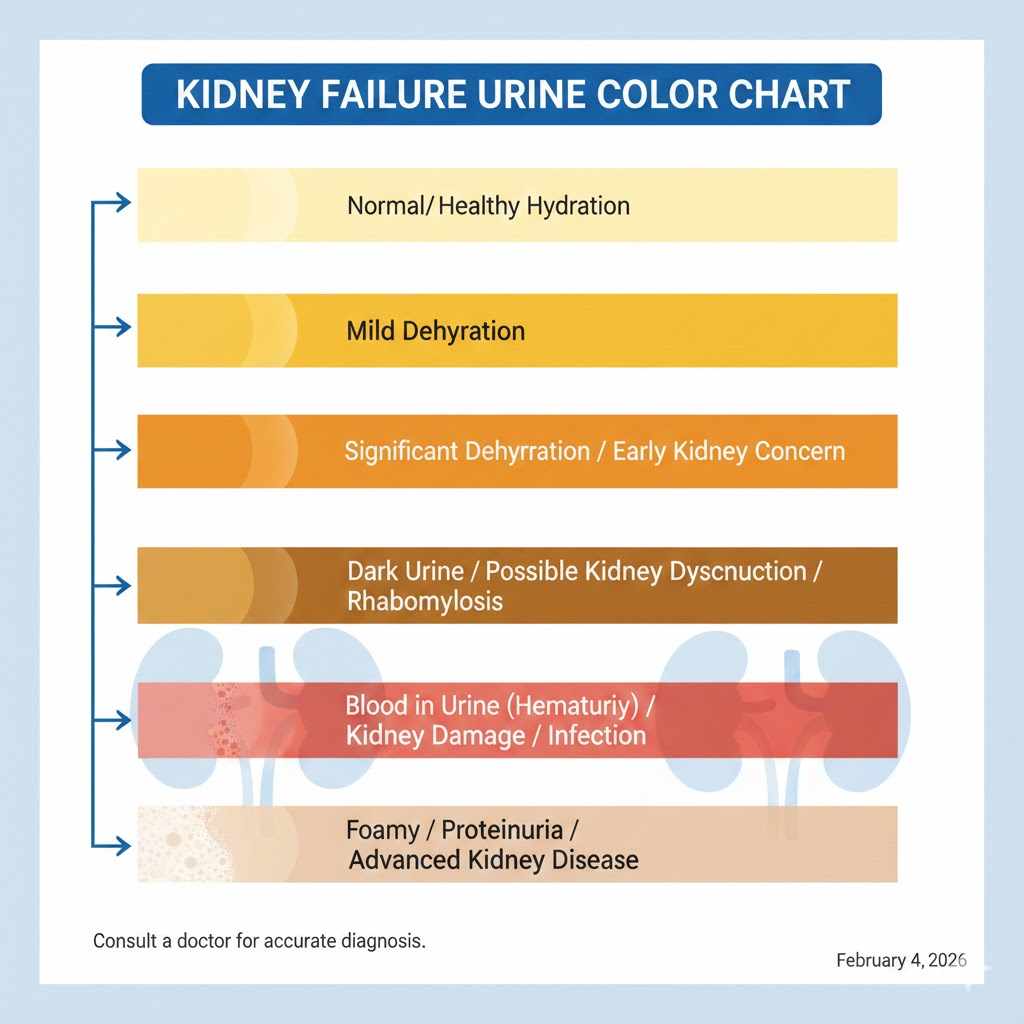
A Kidney Failure Urine Color Chart is a simple yet powerful way to understand what your body may be communicating about kidney health. At Healthier Me Today, we focus on everyday awareness that helps people recognize early warning signs before serious complications develop. Urine color, clarity, and texture often change when kidneys are not functioning properly, making daily observation an important habit for long-term wellness.
Healthy urine is usually clear to pale yellow, which indicates proper hydration and effective kidney filtration. When kidneys are working well, they remove waste and excess fluids efficiently, resulting in a light-colored urine output. According to Healthier Me Today, consistently pale yellow urine is generally a positive sign, especially when there is no strong odor or foam present. Adequate water intake plays a major role in maintaining this healthy urine appearance.
Dark yellow or amber urine is commonly associated with dehydration. When the body does not receive enough fluids, the kidneys conserve water by producing more concentrated urine. This darker color is a signal that the kidneys are under extra workload. While occasional dark urine can happen after sweating or physical activity, frequent dark yellow urine on a Kidney Failure Urine Color Chart may suggest ongoing dehydration that can stress the kidneys over time.
Brown or tea-colored urine is more concerning and often highlighted as a warning shade in a Kidney Failure Urine Color Chart. This color may indicate that waste products are building up in the body due to reduced kidney filtration. It can also be associated with muscle breakdown or severe kidney damage. Healthier Me Today emphasizes that brown urine should never be ignored, especially if it appears alongside symptoms such as swelling in the legs, fatigue, or reduced urine output.
Red or pink urine is another serious color change. Although certain foods can temporarily alter urine color, persistent red or pink urine may indicate blood in the urine. Blood can appear due to kidney infections, stones, or progressive kidney disease. On a Kidney Failure Urine Color Chart, red and pink shades are considered urgent signals. Healthier Me Today advises seeking medical evaluation promptly if this color change is noticed more than once.
Foamy or bubbly urine is an important feature often included alongside color changes in a Kidney Failure Urine Color Chart. Excess foam that does not disappear quickly can be a sign of protein leakage into the urine. Healthy kidneys normally prevent protein from passing into urine, so persistent foam may suggest kidney damage. Healthier Me Today encourages people to pay attention to this sign even if urine color seems normal.
Cloudy or milky urine may also appear when kidney function is impaired. This can be caused by infections, excess minerals, or the presence of waste products that the kidneys are unable to filter properly. If cloudy urine is accompanied by discomfort, fever, or burning during urination, it may point toward infection or kidney stress. Tracking such changes using a Kidney Failure Urine Color Chart helps provide clear information to healthcare professionals.
Green or blue urine is rare and usually linked to medications, food dyes, or diagnostic tests. While these colors are not commonly associated with kidney failure, Healthier Me Today recommends monitoring them if they persist, as unusual urine colors can sometimes signal underlying metabolic or urinary issues.
Using a Kidney Failure Urine Color Chart does not require medical training. Observing urine color in good lighting, preferably in a clear container, allows for more accurate assessment. It is helpful to look for patterns over several days rather than focusing on a single occurrence. Healthier Me Today supports keeping a simple daily record of urine color, hydration levels, and any accompanying symptoms for better self-awareness.
Lifestyle habits have a strong influence on urine color and kidney health. Drinking sufficient water helps flush toxins and prevents urine from becoming overly concentrated. A balanced diet with controlled salt intake reduces pressure on the kidneys. Healthier Me Today also highlights the importance of managing blood pressure and blood sugar, as both conditions are closely linked to kidney disease and noticeable changes on a Kidney Failure Urine Color Chart.
While a Kidney Failure Urine Color Chart is an excellent awareness tool, it is not a diagnostic method. Persistent changes such as dark brown, red, or foamy urine should always be evaluated by a healthcare professional. Early detection allows for better management and may slow the progression of kidney disease. Healthier Me Today believes that simple daily observations, when combined with timely medical care, can make a meaningful difference in long-term kidney health.
By understanding and regularly checking a Kidney Failure Urine Color Chart, individuals can become more connected to their bodies and more proactive about their well-being. Healthier Me Today encourages mindful habits, hydration, and awareness as practical steps toward protecting kidney function and supporting a healthier future.







Write a comment ...